 Airports & Sceneries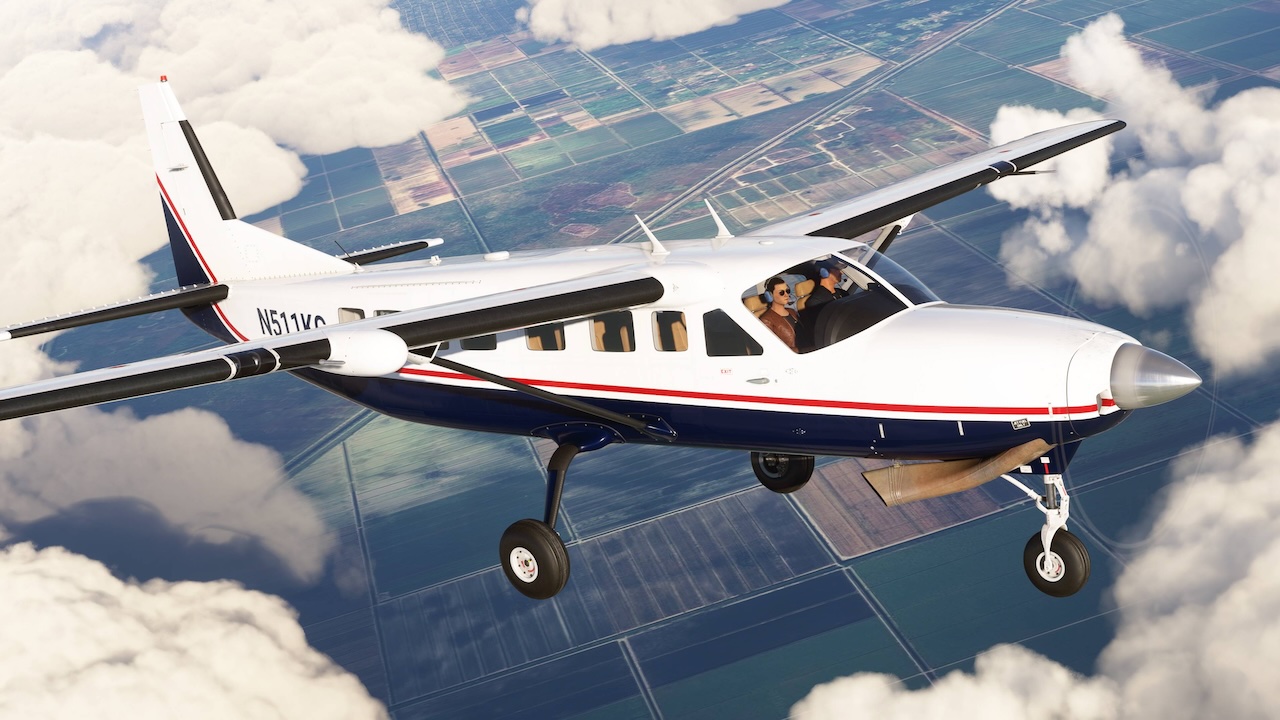
– New Features:
– Added numerous sounds pertaining to engine damage during startup, shutdown, at all power settings, and several turbine specific engine failures, like compressor stall/surging.
– Added dynamic under-wing registration to default liveries with better feature support for livery painters.
– Sounds for all exterior interactions, like opening and closing doors, are now audible during walkarounds.
– Added seamless support for the native water rudder keybinding while still supporting the tablet interface triggered water rudder cable failure.
– Engine damage will now influence ITT beyond 40% damage.
– Previously, only crew members consumed oxygen, so as to extend the effective range of the aircraft at altitudes where only crew oxygen was required by regulations. Now, passengers will only consume oxygen when the indicated altitude is above 14,750 feet.
– Bug Fixes:
– Rewrote code relating to the ventilation blowers, as unexpected electrical behavior resulted from old code from the Analog Caravan.
– Fixed visual synchronization problem with the tablet failure interface when failures were triggered from HTML events, in preparation for collaboration with online services.
– Further refinement of propeller and engine sound leveling inside and outside the aircraft.
– Turbine propeller blade angle animation was mistakenly driven from simplified code from previous Black Square aircraft, which has now been replaced with improved behavior in all other Black Square aircraft (except the TBM 850, which will also receive this update).
– The fuel selectors off warning system will no longer activate when the firewall fuel cutoff handle is pulled. The fuel selector off warning horn will also be deactivated when the START CONT circuit breaker is pulled, as the two circuit breakers were previously configured in parallel, not series.
– Increased empty weight of the Cargomaster to 4,040lbs to reflect inclusion of the Cargopod. Useful load and full fuel payload numbers have been adjusted accordingly.
– Yoke-mounted electric trim switches will now only function when the autopilot is powered in addition to the electric trim actuator circuit.
Black Square’s tablet interface lets you configure all options, manage payload, control failures, and monitor engines, electrical schematics and environmental control systems, all from within the simulator. The failure system allows for persistent wear, MTBF and scheduled failures for nearly every component in the aircraft. The 3D gauges are affected by physics and can even become stuck without engine vibration, requiring a tap on the glass to free them.
Radio navigation systems are available from several eras of the C208’s history. Fly without GPS via a Bendix KNS-80 RNAV system, or with the convenience of a Garmin GTN 750/650 (PMS50 or TDS). Other radio equipment includes KX-155 radios, KLN-90B, GNS 530/430, KAP 140 Autopilot and an RDR1150XL Weather Radar. A 145+ page manual provides instruction on all equipment, and 42 in-game checklists with control highlighting are included for normal and emergency procedures.
This product includes only the passenger landplane with/without cargo pod, with a 675 shaft-horsepower PT6A-114A engine, and an improved de-icing system.
ANALOG CARAVAN OWNERS: While the panel of the Caravan Professional might look familiar, almost all other aspects of the aircraft have been rebuilt with Black Square’s current technology and high standards of quality. The major additions include custom exterior models, custom sound package from Boris Audio Works, higher quality materials with modifications for each model of aircraft, fine-tuned performance tables, tablet visualisers with all the systems required to drive them, more avionics options, and the turbine engine simulation that debuted with the Turbine Duke. This expansion of the Analog Caravan represents 1,000+ hours of dedication and roughly a doubling of the aircraft’s code complexity. Once you experience Black Square’s latest technology in your favorite C208, the difference will be clear!
Primarily analogue instrumentation augmented with modern avionics is still the most common aircraft panel configuration in the world. Challenge your piloting skills by flying IFR to minimums with a fully analogue panel and no GPS. You’ll be amazed at the level of skill and proficiency you can achieve to conquer such adversity, and how it will translate to all your other flying.
