 Airports & Sceneries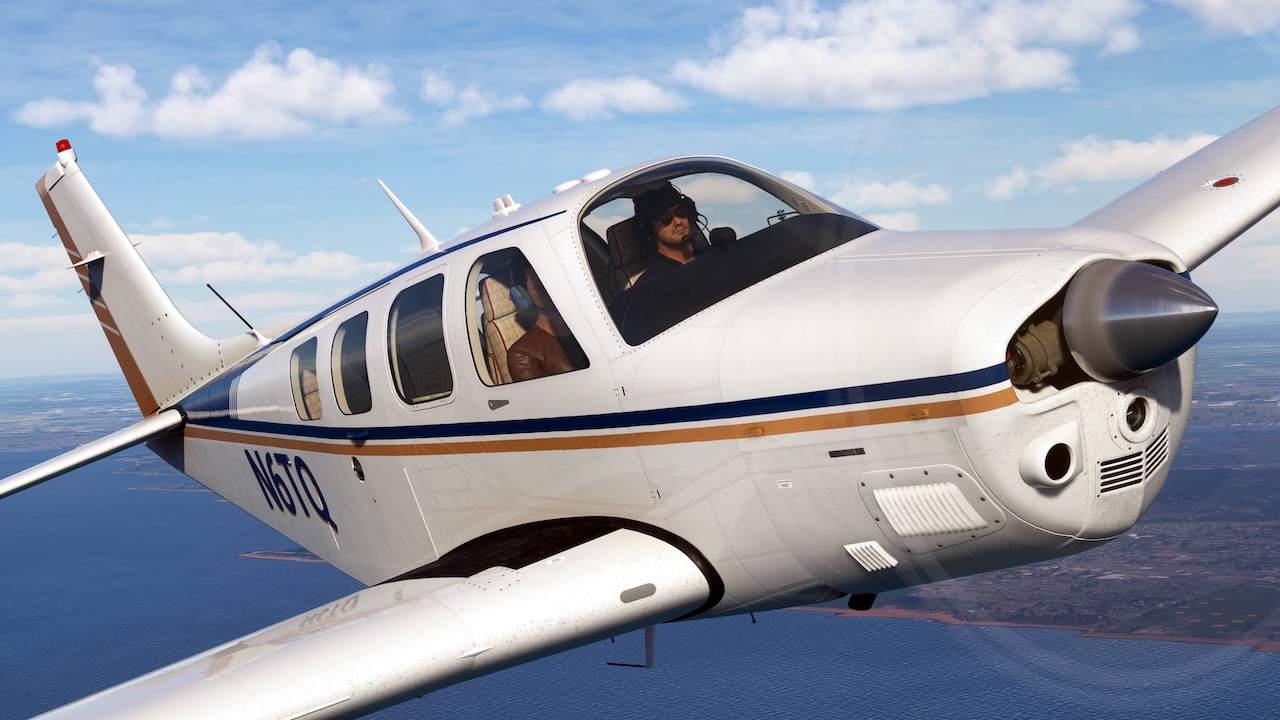
– Fixed lighting effect positions on wings (Turbine variant)
v0.1.1 / v1.1.0:
– New Features:
– In v1.0, winglets and tip-tanks were togglable via the tablet interface, but this was only a visual change. Now, all the relevant systems (including exterior light placement) should accompany the visual change. Keep in mind that aerodynamic changes cannot be made on the fly, so there will be slight inaccuracies when this toggle is selected, like the empty weight of the aircraft, or the drag not reflecting these changes.
– When the “Hide Radar Pod” toggle is activated on the tablet interface, the radar display unit in the cockpit will also be hidden, and the avionics will rearrange to fill the space. Electrical systems and circuit breakers will also conform to this change.
– Setting L:BKSQ_IgnitionPosition_1 to a value of 5 will now engage the starter without its spring returning to the magneto both position. Also fixed a particular event used to trigger the starter, which may prevent conflicts with some hardware bindings.
– Added accurate trim tab movement, particularly noticeable on walkarounds.
– Bug Fixes:
– Fixed some tablet options that were not saving state between flights.
– The reciprocating engine compression sinusoid was 30° counterclockwise from the true top dead center.
– Previously, the propeller would not spring-return to its fully coarse position in the event of a complete loss of oil pressure, such as during an engine failure.
– Fixed constant that decreased the engine spool down time in the Turbine Bonanza.
– Removed automatic starter cutoff at ~45% Ng.
– Decreased oil temperature time constant for slower heating and cooling to match Dukes.
– Removed magneto impulse couplings from right magneto on reciprocating engine visualizer.
– Fixed exterior aileron and elevator stop sounds, which previously played partway through the throw of the surface.
– Changed material properties of window warning decals, which previously appeared behind terrain objects and other decals.
– Slightly adjusted landing gear compression constants so aircraft sits more nose high when unloaded.
– The strobe charge/discharge sound may not have worked in v1.0 in the reciprocating variants of this aircraft under some circumstances.
Black Square’s new tablet interface lets you configure all options, manage payload, control failures, and monitor engines, electrical schematics and environmental control systems, all from within the simulator. The failure system allows for persistent wear, MTBF and scheduled failures for nearly every component in the aircraft. The 3D gauges are affected by physics and can even become stuck without engine vibration, requiring a tap on the glass to free them.
Radio navigation systems are available from several eras of the A36’s history. Fly without GPS via a Bendix KNS-81 RNAV system, or with the convenience of a Garmin GTN 750/650 (PMS50 or TDS). Other radio equipment includes KX-155 radios, KLN-90B, GNS 530/430, KFC 150 Autopilot and an RDR1150XL Weather Radar. A 200+ page manual provides instruction on all equipment, and 40 in-game checklists with control highlighting are included for normal and emergency procedures.
This product includes three airframes: the A36 of the mid-2000s, the 2001 36TC with an aftermarket turbo-normalising package, and the B36TP turboprop conversion. Six distinctive interiors and nine paint schemes are included from five decades of flying.
Analog Bonanza Owners: While the panel of the Bonanza Professional might look familiar, almost all other aspects of the aircraft have been rebuilt with Black Square’s current technology and high standards of quality. The major additions include a custom exterior model, custom sound package from Boris Audio Works, higher quality materials with modifications for each model of aircraft, fine-tuned performance tables, tablet visualisers with all the systems required to drive them, more avionics options, and the reciprocating engine simulation that debuted with the Piston Duke. This expansion of the Analog Bonanza represents 1,000+ hours of dedication, and roughly a doubling of the aircraft’s code complexity. Once you experience Black Square’s latest technology in your favorite A36, the difference will be clear!
Primarily analogue instrumentation augmented with modern avionics is still the most common aircraft panel configuration in the world. Challenge your piloting skills by flying IFR to minimums with a fully analogue panel and no GPS. You’ll be amazed at the level of skill and proficiency you can achieve to conquer such adversity, and how it will translate to all your other flying.
